About SyntheNote

The visit should belong to the patient, not the keyboard.

SyntheNote listens to the encounter and drafts the note, so what's left at the end of a visit is a read-through — not an evening of typing.

Built in San Francisco, California

  1. Record the visit
  2. Draft the note
  3. Give back the hours
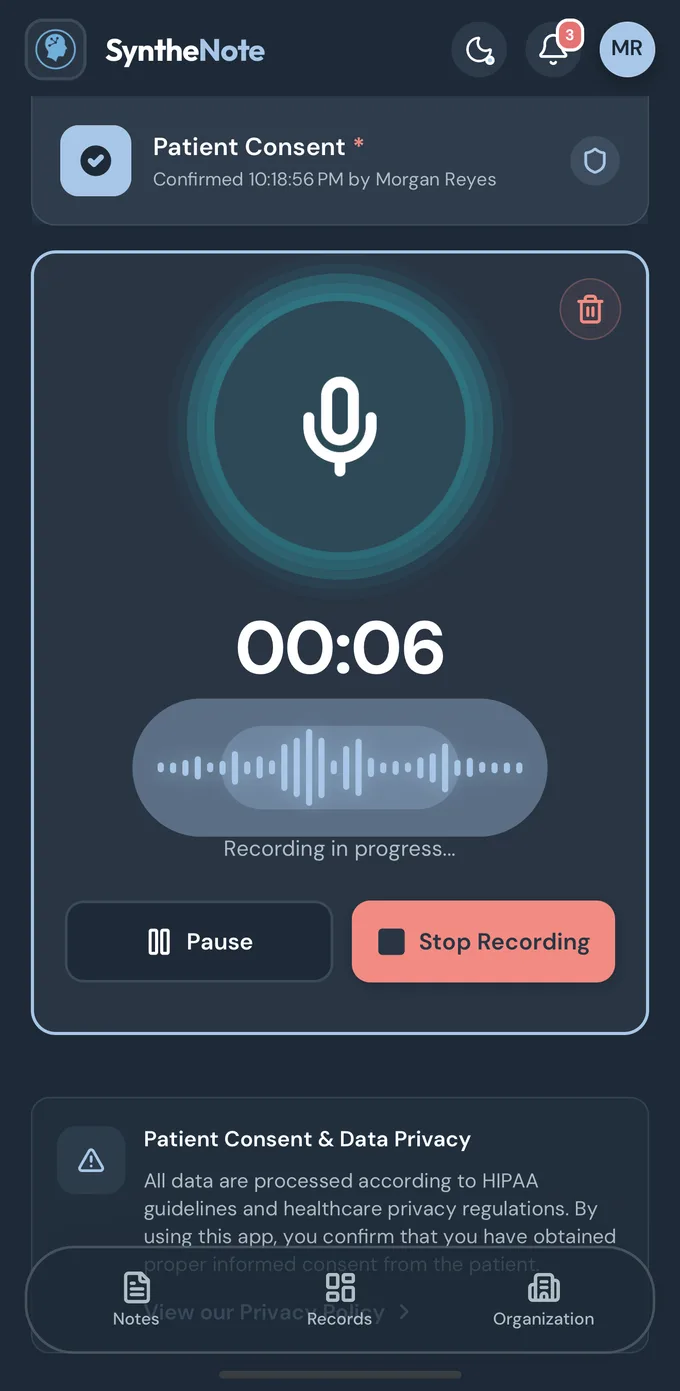
Recording a visit, with patient consent confirmed first
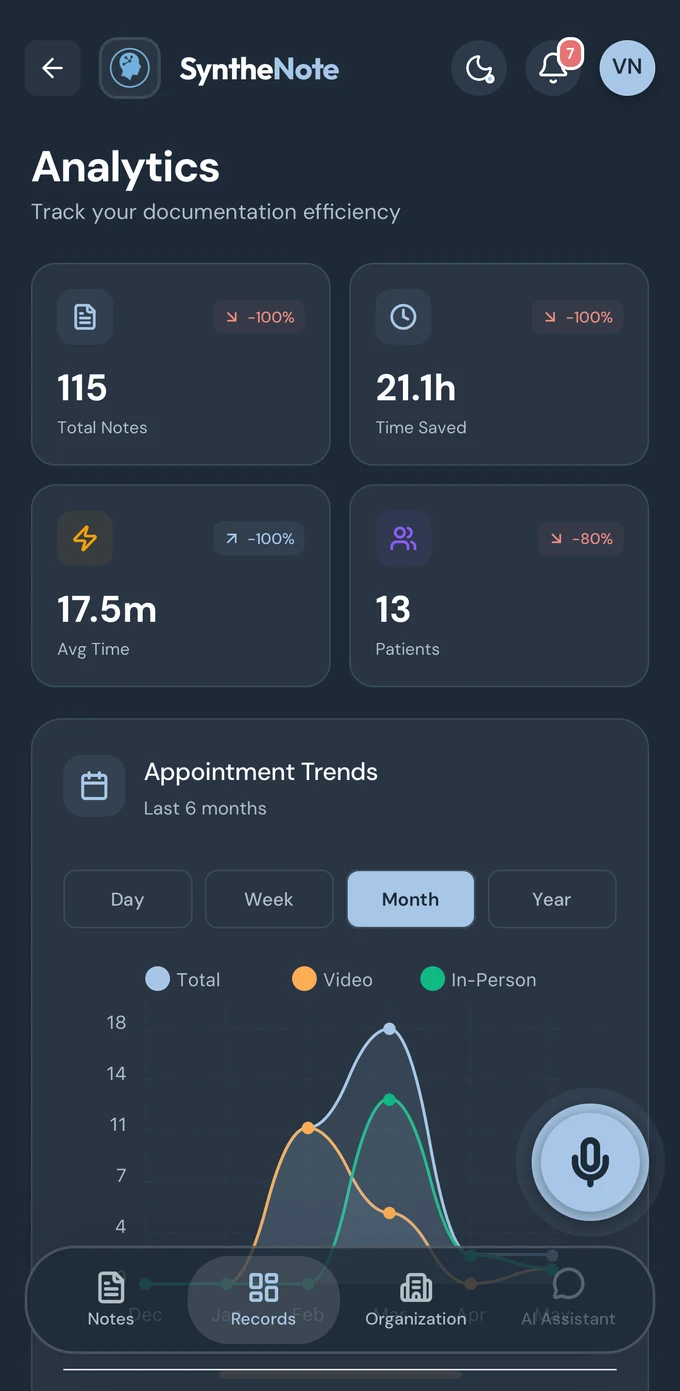
A clinician's own analytics: notes, time saved and appointment trends

We are trying to do two things at once

Most documentation tools trade one against the other. A note that is faster to produce is usually worse to read. We do not accept that trade.

Protect the care

A note is a clinical document before it is a record. It has to be accurate, specific to the patient in front of you, and something you would be comfortable defending. SyntheNote drafts; the clinician reviews and approves. Nothing is filed without a human reading it.

35languages, so the note matches the language the visit was spoken in
Give back the hours

Documentation is the part of the job that follows clinicians home. Removing it is not a convenience — it is the difference between finishing at six and finishing at nine, and over a career it is the difference between staying in medicine and leaving it.

60specialty templates, so the structure fits the visit you actually had

How it gets built

Clinicians and data scientists, in the same room

A scribe built only by engineers produces notes that read like software output. A scribe built only by clinicians never ships. SyntheNote is built by both, deliberately.

Practising providers across specialties tell us what belongs in a note, where a workflow quietly costs ten minutes, and what should never be automated away. Data scientists turn that into models that handle accents, interruptions, code-switching and the way people actually talk when they are unwell.

Every release is shaped by the same question: did this make someone's day shorter without making the note worse?

Healthcare providers

Physicians and clinical teams across specialties, recording real encounters and telling us plainly when a note is wrong.

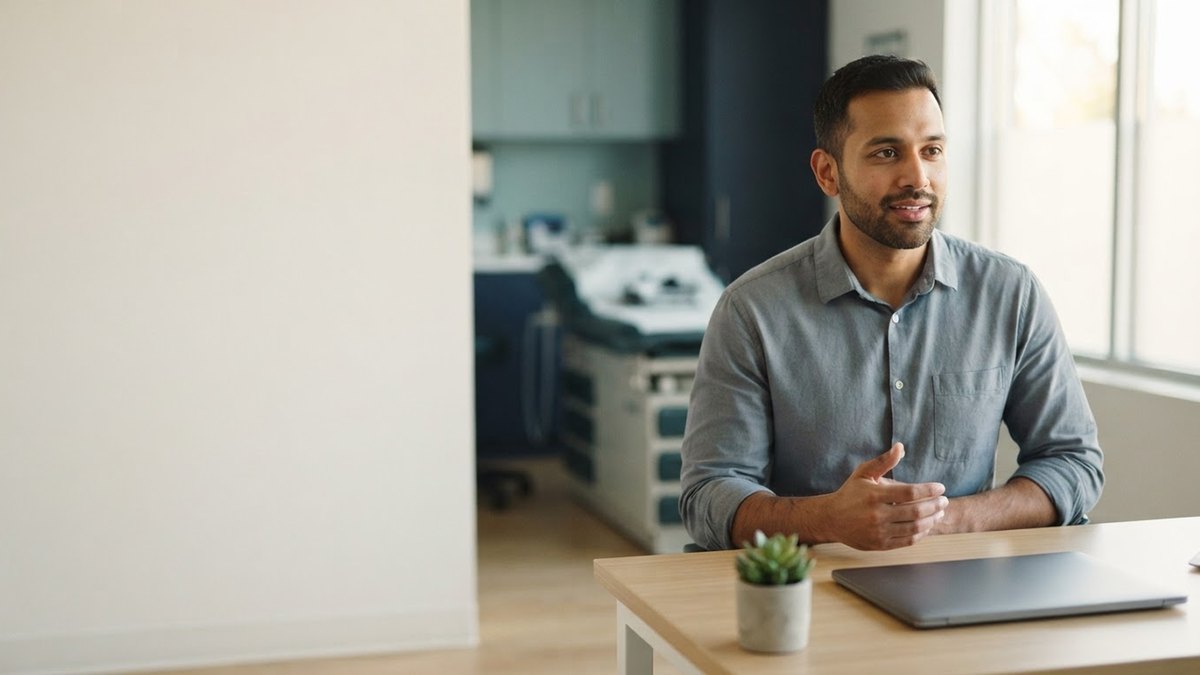
A clinician in conversation during a consultation

What we hold ourselves to

Commitments that decide what we build and, more often, what we refuse to.

The clinician approves every note

AI drafts. A person reviews, corrects and signs. We will not ship a path that files a note no human has read.

Patient data is never the product

Recordings and notes belong to the practice. We do not sell them, and we do not train on them to sell something else.

We document what it gets wrong

Plain descriptions of how data is handled, what is stored, and what the AI can and cannot do.

Care is not spoken in one language

A visit conducted in Spanish, Igbo, Arabic or Hindi deserves a note in that language, not a rough English approximation. SyntheNote was the first clinical scribe built with native Nigerian language support, and that principle now covers 35 languages — because the quality of a note should not depend on which language the patient is most comfortable in.

Spend the visit with the patient

SyntheNote drafts the note. You review and approve it. On iPhone, Android and the web.